.png)
Long Range Readers for Vehicle Access Control
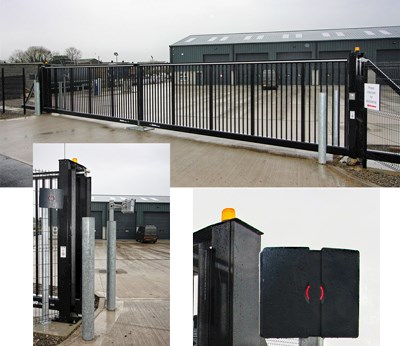
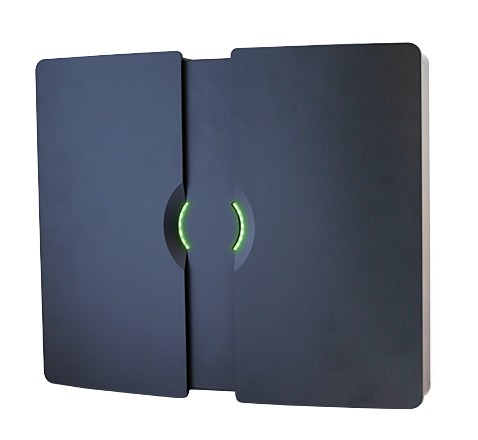
Long range readers provide automatic vehicle identification at distances up to 15 metres, eliminating the need for drivers to stop at entry points. Nortech offers two distinct technologies to suit different security requirements and budgets. The TRANSIT system uses semi-active RFID technology for high-security applications, enabling simultaneous vehicle and driver identification at speeds up to 200 km/h. This makes it ideal for airports, seaports, and military installations where both vehicle and driver verification is essential.
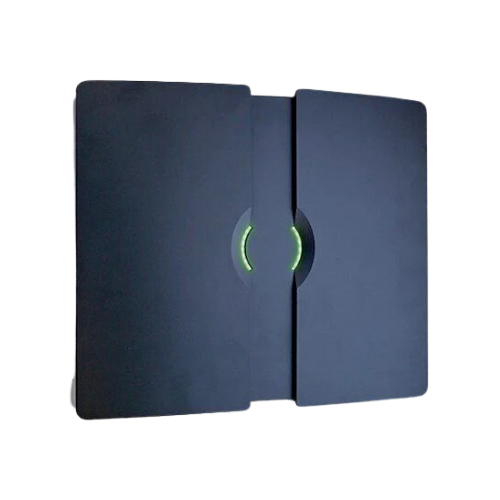
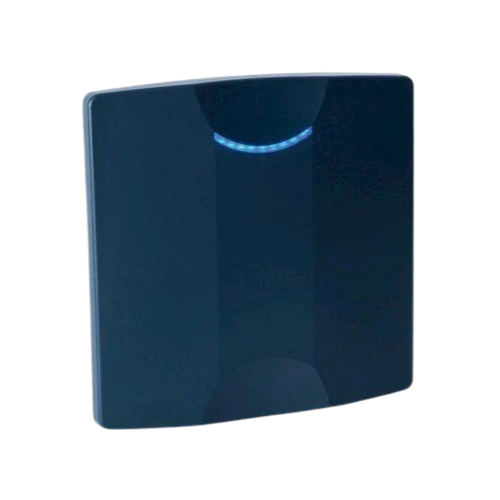
The uPASS system leverages passive UHF RFID technology, offering a cost-effective solution for car parks, gated communities, and corporate campuses where vehicle identification alone suffices. Both systems feature robust weatherproof housings rated to IP66, circular polarised antennas for flexible tag orientation, and industry-standard communication interfaces including Wiegand, RS485, and Ethernet.
With on-site adjustable read ranges and support for OSDP protocols, these readers integrate seamlessly into existing access control infrastructures whilst providing the scalability needed for future expansion.
.svg)
.png?width=496&height=300&name=Mask%20group%20(16).png)

TRANSIT readers use semi-active RFID technology with read ranges up to 15 metres and can identify both vehicles and drivers simultaneously through the Booster tag system. They're designed for high-security applications requiring AES encryption and speeds up to 200 km/h. uPASS readers use passive UHF technology with 10-metre read ranges, offering a more cost-effective solution for vehicle-only identification in car parks and gated communities where driver verification isn't required.
Long range readers eliminate the security vulnerabilities associated with window-mounted proximity cards that can be easily transferred between vehicles. The extended read range allows identification before vehicles reach the barrier, enabling security personnel to respond to unauthorised access attempts. TRANSIT Booster tags provide dual-factor authentication by requiring both an authorised vehicle and registered driver credential, whilst AES encryption prevents tag cloning and replay attacks in high-security environments.
Yes, TRANSIT Ultimate readers can identify vehicles travelling up to 200 km/h (125 mph) when positioned at appropriate distances, making them suitable for free-flow applications and high-speed entry lanes. The uPASS system handles vehicle speeds typical of barrier-controlled access points. Both systems feature adjustable read ranges to optimise performance for specific lane configurations, whether managing stop-and-go traffic at security checkpoints or enabling uninterrupted flow at logistics facilities.
TRANSIT offers multiple semi-active tags including Compact Buttons for windscreen mounting (15m range), Heavy Duty ISO tags for harsh environments (20m range), and Booster tags that combine vehicle identification with driver credentials from HID Prox, MIFARE, iClass, or LEGIC cards. uPASS provides passive UHF tags in windscreen-mount, exterior-mount, heavy-duty, and ISO card formats, plus combination tags integrating UHF with HF/LF proximity technologies for dual-purpose applications.
Both TRANSIT and uPASS readers support industry-standard communication protocols including Wiegand, RS485, RS422, and Ethernet, enabling seamless integration with most access control panels. They support OSDP v2 for secure channel communication with controllers, whilst TCP/IP connectivity allows remote configuration and monitoring. Existing proximity Wiegand installations can be upgraded to long range identification without additional wiring. Configuration is straightforward using online interfaces for uPASS Go or the TRANSIT configuration software.
Trusted By These Companies
Here are just a few of the many organisations that have benefited from Nortech products and solutions.








Case Studies
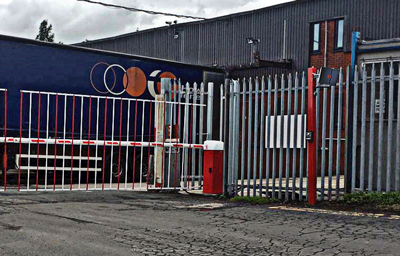
Transit Ultimate Gives Express Parcels The Edge
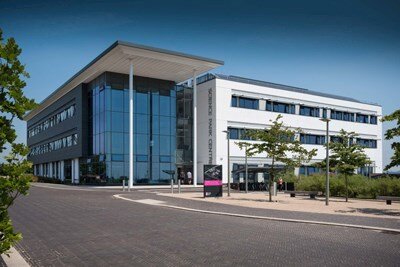
uPASS Reach Provides Primary Vehicle Access Solution for Science Park