Nedap uPASS Go
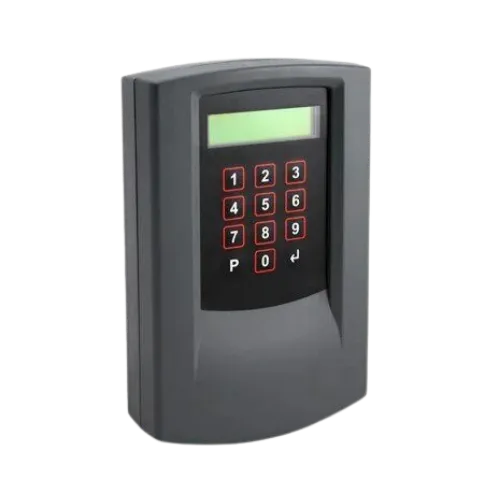
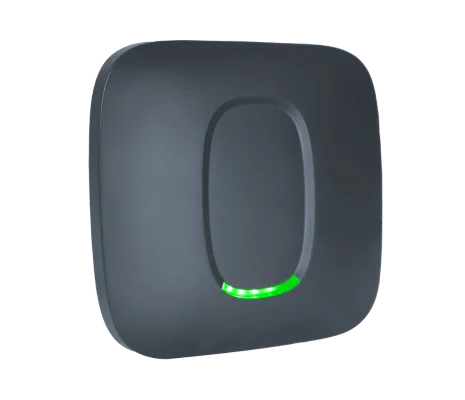
Based on battery-free passive UHF technology, the uPASS Go reader provides a cost-effective solution for convenient vehi…
› View DetailsSolutions
A car park access control system decides which vehicles get past the barrier of a private car park, identifying each one by a windscreen tag, number plate, card or QR code and opening only for the people allowed to park there at that time. We supply the parts that make the decision, the controllers and readers we design and manufacture in South Wales, Norpass3 software, and the Nedap long-range readers and ANPR cameras we distribute and support, for installers to fit alongside the barrier of your choice.
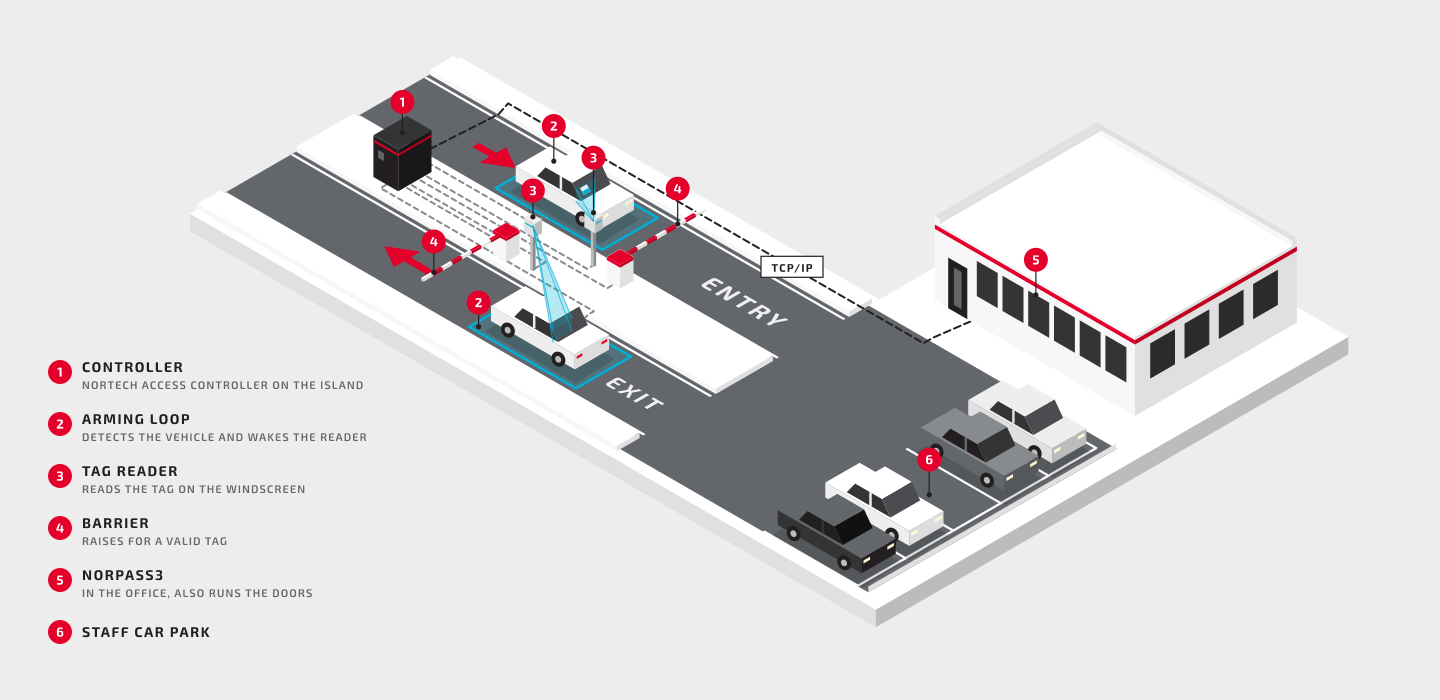
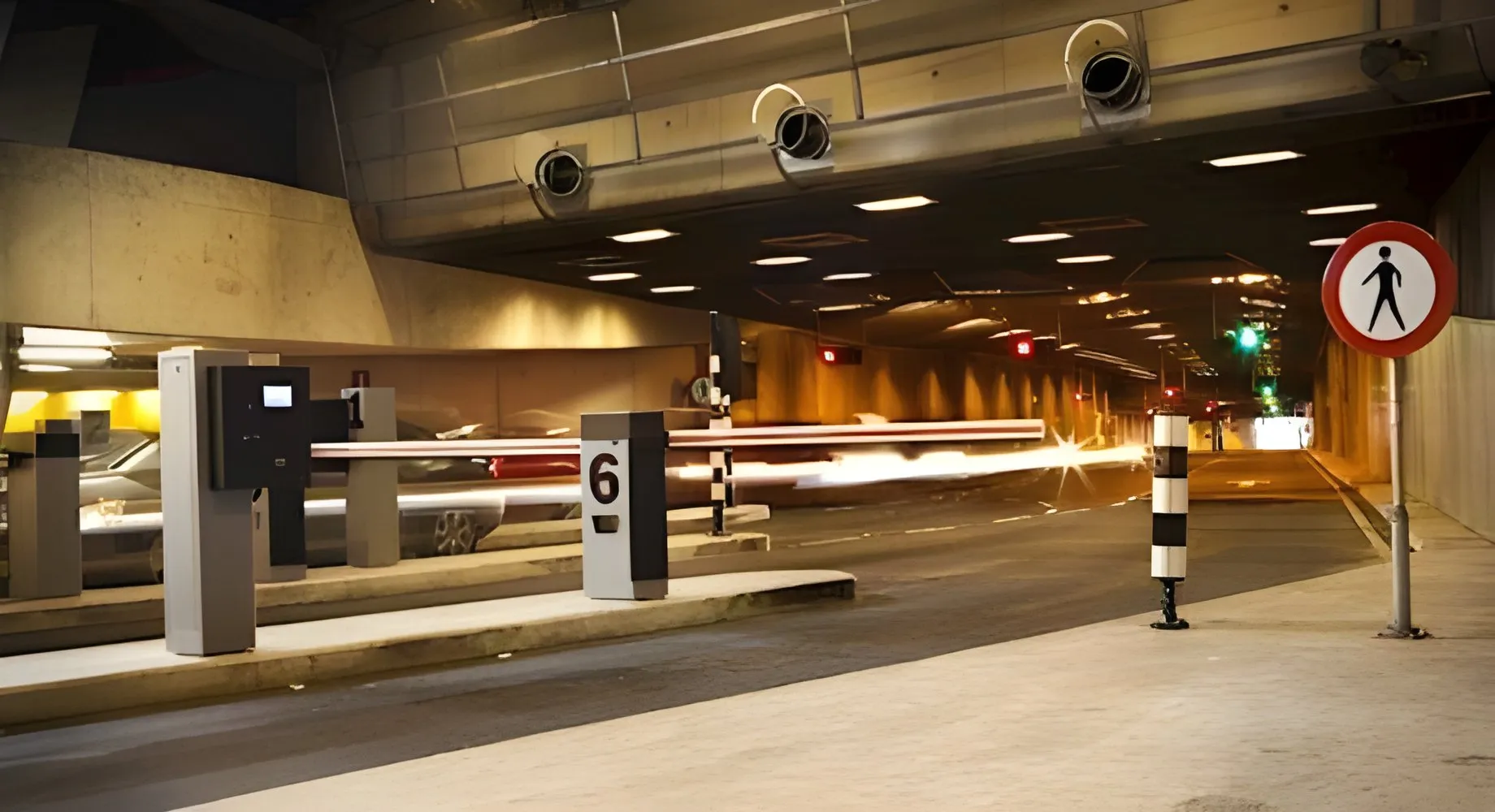
A car park access control system controls which vehicles can enter and leave a private car park. A reader at each barrier identifies the vehicle or its driver by a windscreen tag, number plate, card, fob or QR code, and a controller checks that credential against the access list before it opens the barrier. It is how staff, residents' and tenant car parks are kept for the people entitled to use them without a manned gatehouse.
 1
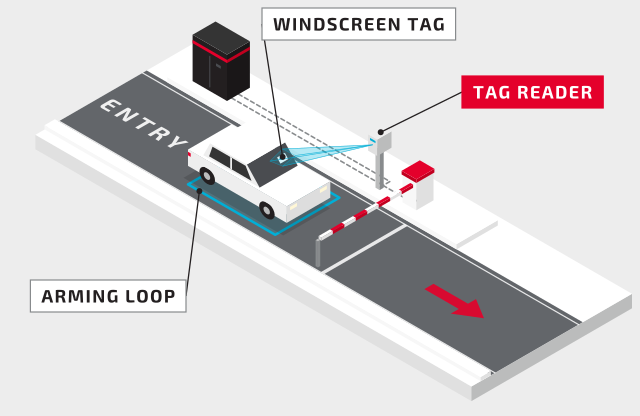
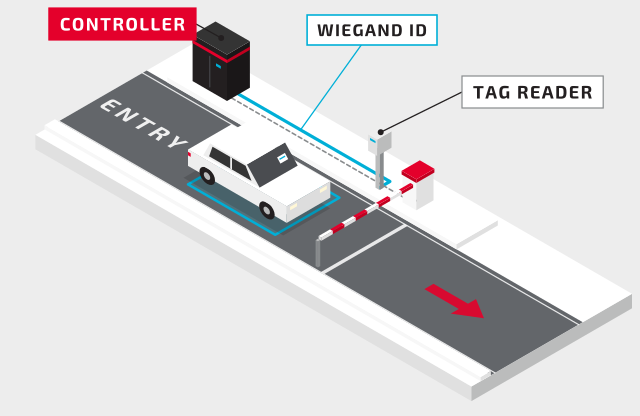
1 As a vehicle drives onto the arming loop in front of the barrier, a long-range reader beside the lane reads its windscreen tag at up to 10 metres. The loop arms the reader, so it only reads when a vehicle is in the lane.
 2
2 The reader sends the tag's number to the controller as a Wiegand ID, the format a card reader uses. A number plate read by an ANPR camera, or a card, fob or QR code shown at a reader on a post, reaches the controller the same way.
 3
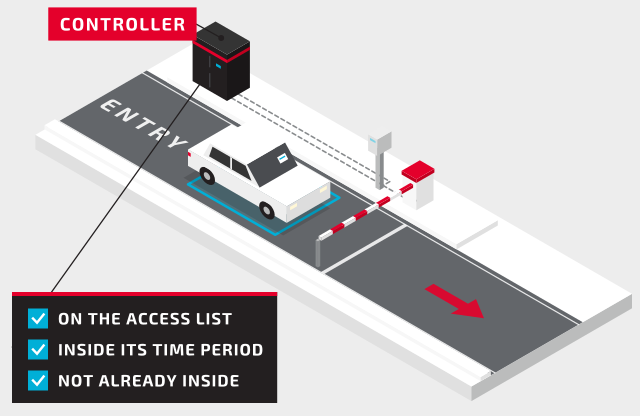
3 The controller checks that the ID is on its access list and inside the time periods when that driver may park. With anti-passback on, it also checks the vehicle isn't already recorded inside, so one tag or card can't let in a second car.
 4
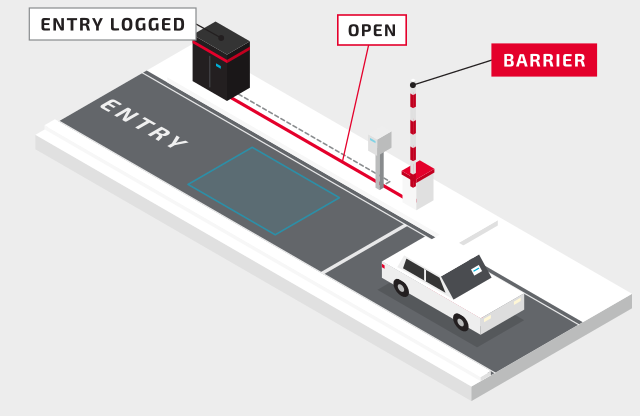
4 The controller's latch relay, rated at 2 A at 30 V DC, gives the barrier its open signal and the entry is logged against the driver or vehicle. An exit reader does the same on the way out, which keeps anti-passback and any space count right.
If the site doesn't need to know who has left, a free-exit loop on the exit lane can open the barrier through the controller's request-to-exit input instead of a second reader. Anti-passback and tenant allocations need a reader on the way out as well.
Every lane needs a way of identifying who is arriving. The choice comes down to who parks there, how often they come, and how much the site wants to issue and recover.
| Long-range tags | Number plates (ANPR) | Cards or fobs at a post | QR codes and smartphones | |
|---|---|---|---|---|
| What the driver does | Nothing: the tag is read as the vehicle approaches | Nothing: the plate is read as the vehicle approaches | Stops and holds the card to a reader by the window | Stops and shows the code or phone to the reader |
| Read range | Up to 10 metres (uPASS Go) | 2 to 10 metres (ANPR Lumo) | Up to 50 mm (VP1) | QR codes at the reader; Bluetooth up to 15 metres, depending on the app (NVITE) |
| What you issue | A windscreen tag for each vehicle | Nothing: plates are registered in the system | Nothing new if staff already carry a building card | Codes sent by the site's visitor or membership software |
| Suits | Staff and residents who park every day | Visitors and contractors authorised in advance, and changing fleets | Sites that already issue staff cards, and quieter lanes | Visitors, members and one-off events |
Many sites mix them: tags for the staff who park every day and number plates for everyone else. Our blog compares the two in long-range RFID vs ANPR, and the ANPR access control system page covers plates in detail.
Where several companies share one car park, a CPC204 shared occupancy controller gives each company its own allocation of spaces. It counts each company's vehicles in and out and stops a company entering once its allocation is used up, while the others can still park. A CPC202 does the same for two companies, or keeps a single company's car park from overfilling.
An intercom that opens the barrier remotely doesn't work with shared counting, because the controller can't tell which group the visitor belongs to; use visitor PINs or exit cards instead. More than four groups can be handled by two controllers reading the same lanes, and our technical team checks those designs before installation.
The controllers that run the barriers are the same ones that run the doors, so a site on Norpass3, our licence-free access control software, manages its car park and its building in one system, with every entry and exit logged against the person or vehicle alongside the door events.
The controllers give the barrier a clean relay contact to open, so they work with most barriers and gates. In the other direction, every reader on this page sends Wiegand or clock and data, the formats most access control panels accept, so the uPASS Go or ANPR Lumo can be added to a system the site already runs. At George Spencer Academy, Advanced IT Services added Nedap ANPR to the school's existing Paxton Net2 system this way.
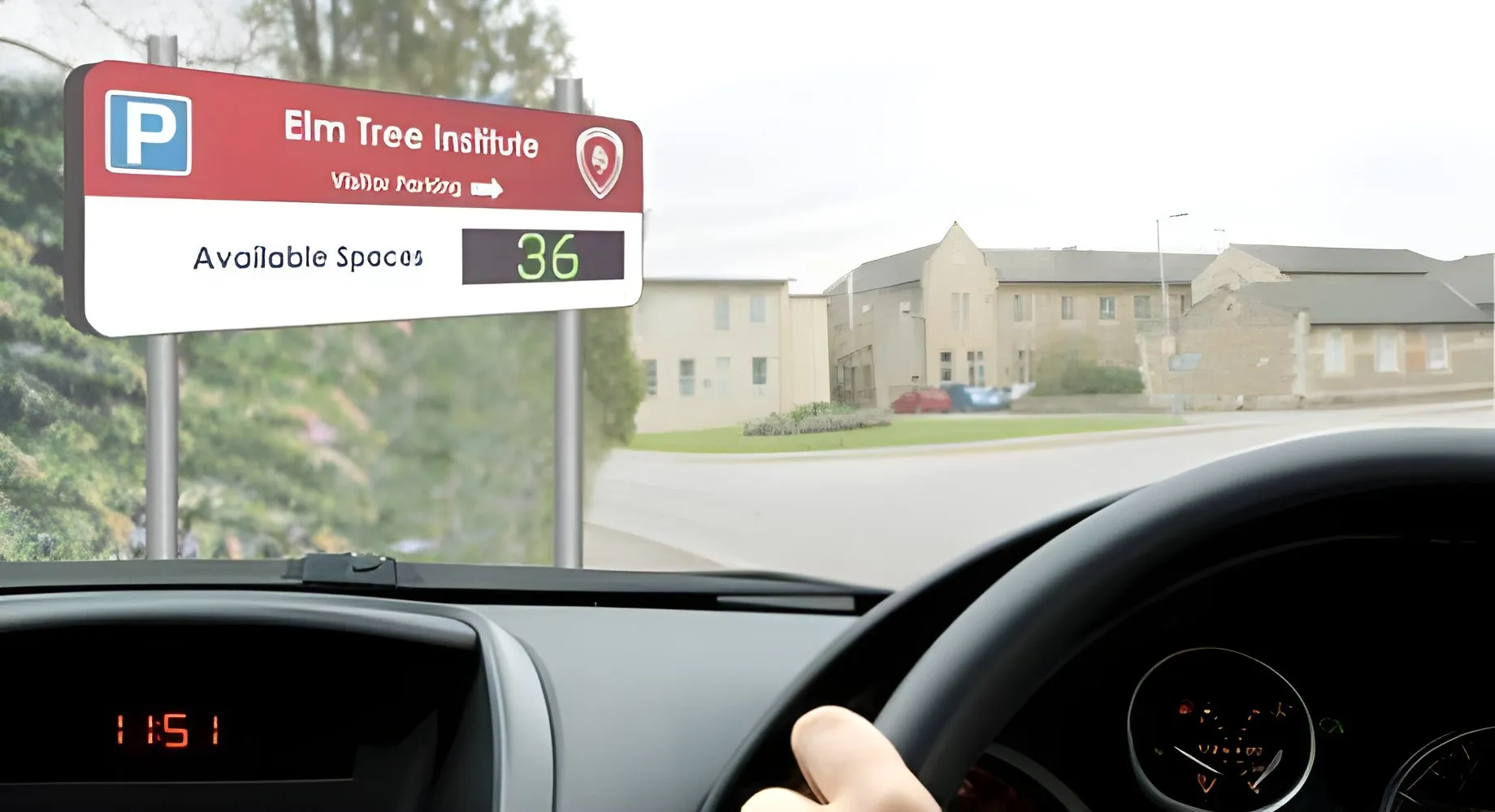
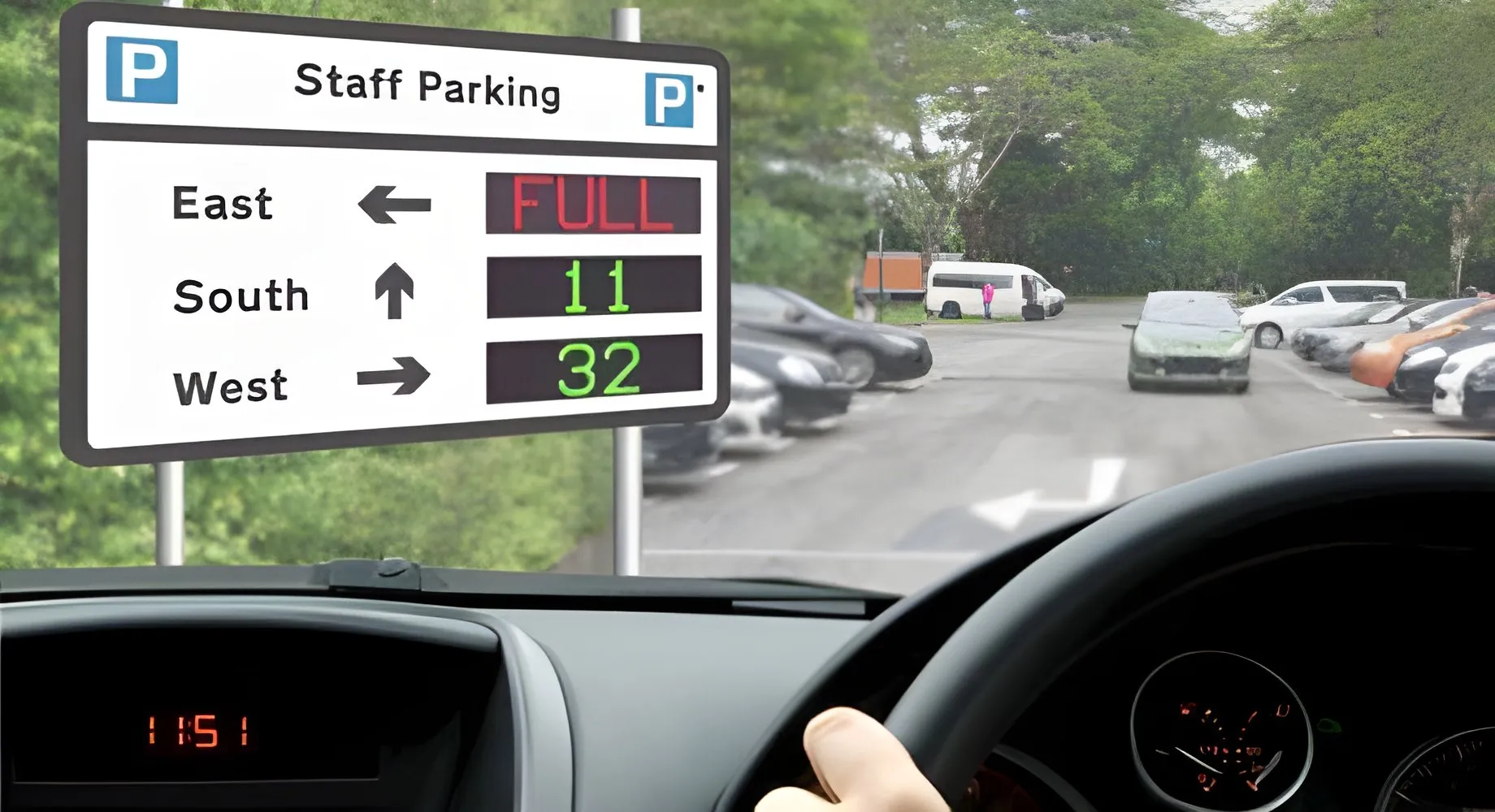
To show drivers the spaces left, or hold the barrier once the car park is full, add counting: see car park counting and guidance, or the ANPR car park barrier system for number plates and counting together.
Our blog breaks down how much an access control system costs and how much an ANPR system costs. We supply through installers and distributors, so the price for your car park comes from the installer after a survey. Our sales team can help put the equipment list together: sales@nortechcontrol.com.
Request a quote
Send us a description of the project or the products you need and we'll aim to quote within 48 hours.
Request Quote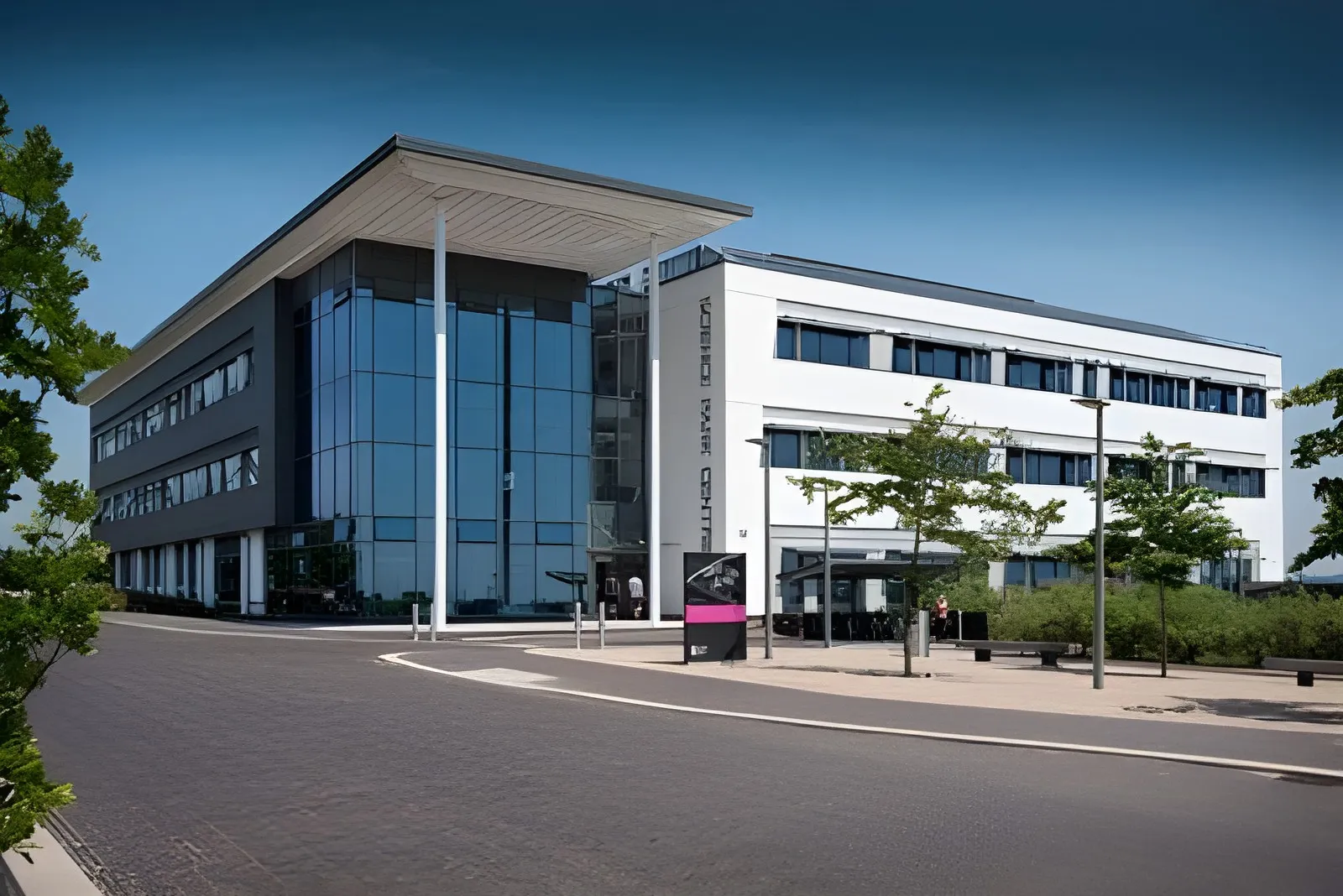
Case study
Exeter Science Park, a 26-hectare business park beside junction 29 of the M5, has two entry lanes and three exit lanes. The park wanted staff out of barrier control, shorter queues at the barriers and better reporting on who came and went.
Newpark Solutions fitted every lane with a barrier, a Nedap uPASS long-range tag reader and an HD ANPR camera. Staff with windscreen tags are read as they approach, and the barrier opens in about 3 seconds. Staff without tags, tenants and expected visitors are registered by number plate, so they drive in without pressing the intercom.
Installed by Newpark Solutions
Read the full case study ›Based on battery-free passive UHF technology, the uPASS Go reader provides a cost-effective solution for convenient vehi…
› View DetailsControl access for groups of users sharing the same parking facility…
› View DetailsExtremely versatile standalone 2-door/2-reader controller that can also manage up to 65,000 users and supports bot…
› View DetailsTogether with Nortech’s modular access control panels, Norpass3 access control software provides a high degree of…
› View DetailsWe're here to help
Call +44 (0)1633 485 533 or Email Us