Nortech — People & Vehicle Access Solutions
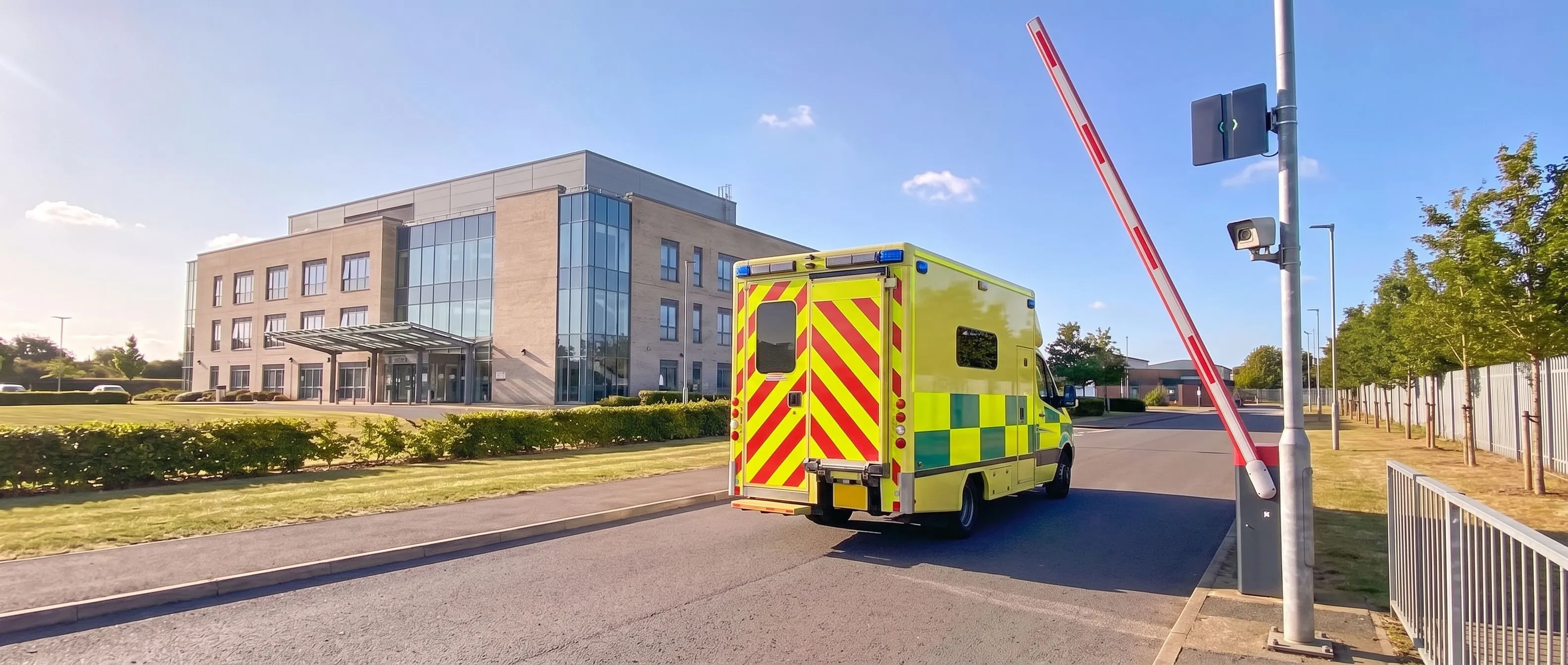
Yellow and green ambulance driving through the raised barrier at a hospital's perimeter gate towards the main building, with a Transit Ultimate long-range reader and a camera on the post beside the lane

Vehicle access control for hospitals and emergency vehicles

Seconds matter. Make the gate the easiest part of the journey.

Trusted by

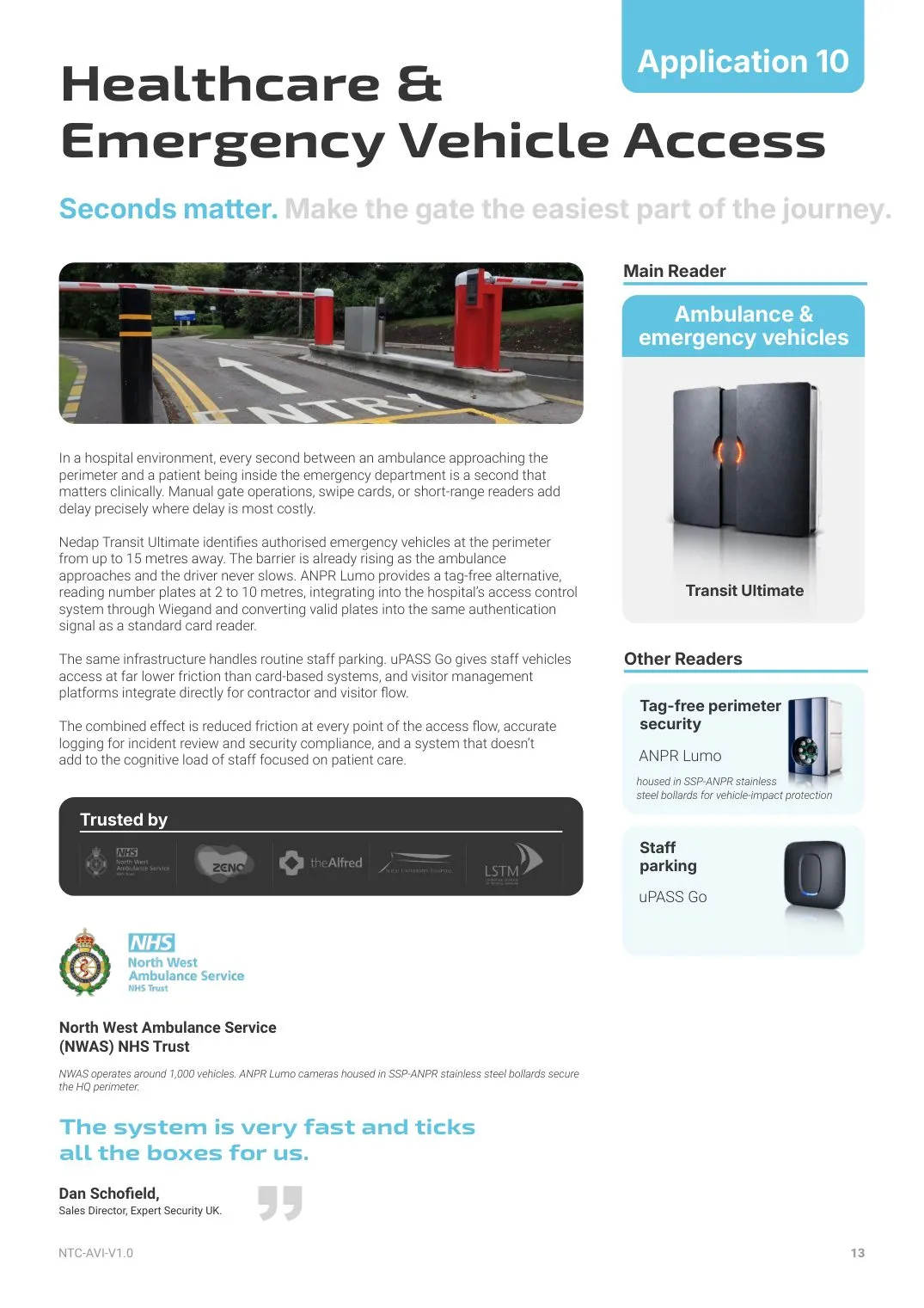
Vehicle access control for a hospital has to get an ambulance through the perimeter without the driver slowing down, and still handle staff parking, contractors and visitors at the same gates. Nedap Transit Ultimate identifies authorised emergency vehicles from up to 15 metres, so the barrier is already rising as the ambulance approaches. ANPR Lumo gives a tag-free route by number plate, and uPASS Go lets staff into the car park on a windscreen tag.

We distribute and support all three as Nedap's certified UK partner, and work with your installer from specification to commissioning.

Delay where it is most costly

In a hospital, every second between an ambulance approaching the perimeter and a patient being inside the emergency department matters clinically. Manual gate operations, swipe cards and short-range readers add delay precisely where delay is most costly.

The same gates carry staff at shift change, contractors, deliveries and visitors, and a security system that adds to the cognitive load of staff focused on patient care is the wrong system.

Accurate logging matters too, for incident review and security compliance, without anyone at the gate keying anything in.

  • The challenge

    The ambulance slows at the gate

    Manual gate operations, a swipe card or a short-range reader all make the driver stop or slow down, with a patient on board.

    The answer

    The barrier is rising as the ambulance approaches

    Transit Ultimate identifies authorised emergency vehicles from up to 15 metres, so the barrier is already rising as the ambulance arrives and the driver never slows.

  • The challenge

    Vehicles with no tag

    Ambulances from another trust, contractors and deliveries carry no tag, and they need a route through the gate too.

    The answer

    The number plate as the credential

    ANPR Lumo reads the plate from 2 to 10 metres and, through Wiegand, hands the hospital's access control system the same authentication signal as a standard card reader.

  • The challenge

    Staff parking at shift change

    Hundreds of staff arrive and leave within minutes, and a card reader in each lane holds the queue.

    The answer

    A windscreen tag for staff

    uPASS Go reads a battery-free UHF tag at up to 10 metres, so staff vehicles get in with far less friction than a card-based system.

  • The challenge

    Logging that depends on the gatehouse

    Incident review and security compliance need an accurate record of every movement, not a logbook kept when the gate was quiet.

    The answer

    Every movement logged automatically

    Each read goes to the hospital's access control system with the vehicle and time, and visitor management platforms integrate directly for contractor and visitor flow.

Which reader for which vehicle

A hospital perimeter sees three kinds of vehicle: emergency vehicles that cannot slow down, staff at shift change, and everything that arrives without a tag. Each is identified in the way that suits it, and all three readers report to the same access control system.

Main reader

Ambulance and emergency vehicles

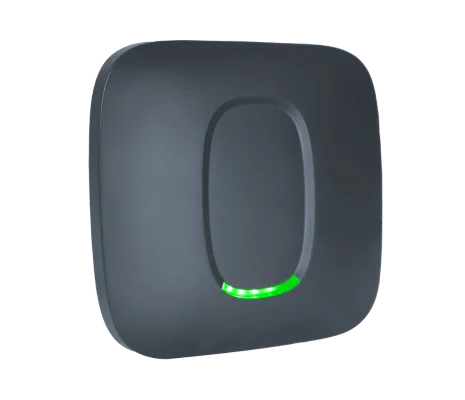
Nedap Transit Ultimate

Authorised emergency vehicles carry a tag in the windscreen, and Transit Ultimate reads it from up to 15 metres as the ambulance approaches the perimeter. The barrier is already rising as it arrives, and the driver never slows.

Reads
Semi-active tag in the windscreen
Read range
Up to 15 metres
Vehicle speed
Up to 200 km/h (125 mph)

Tag-free perimeter security

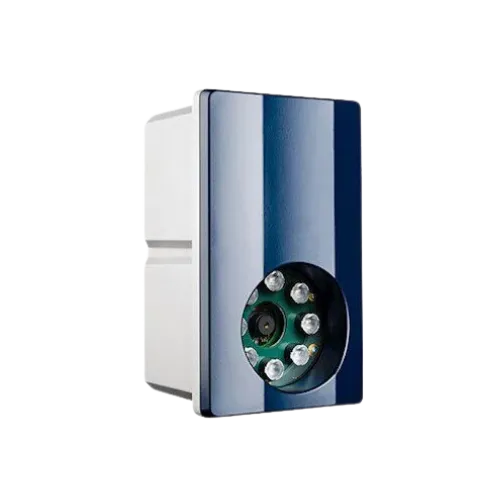
Nedap ANPR Lumo

Reads number plates at 2 to 10 metres and converts a valid plate into the same authentication signal as a standard card reader. At North West Ambulance Service's HQ the cameras are housed in SSP-ANPR stainless steel bollards for vehicle-impact protection.

Reads
The number plate, with no tag
Read range
2 to 10 metres

Staff parking

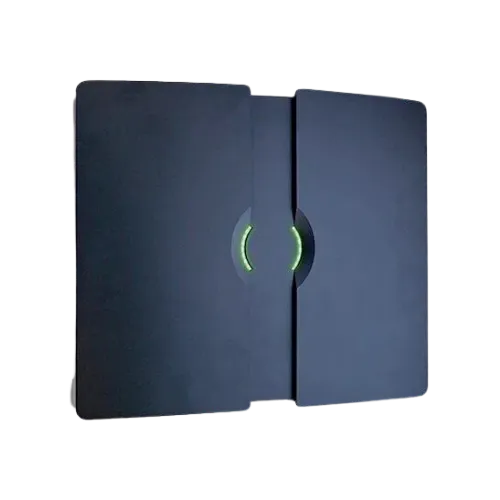
Nedap uPASS Go

A battery-free tag in the windscreen gives staff vehicles access at shift change with far less friction than a card.

Reads
Battery-free UHF windscreen tag
Read range
Up to 10 metres

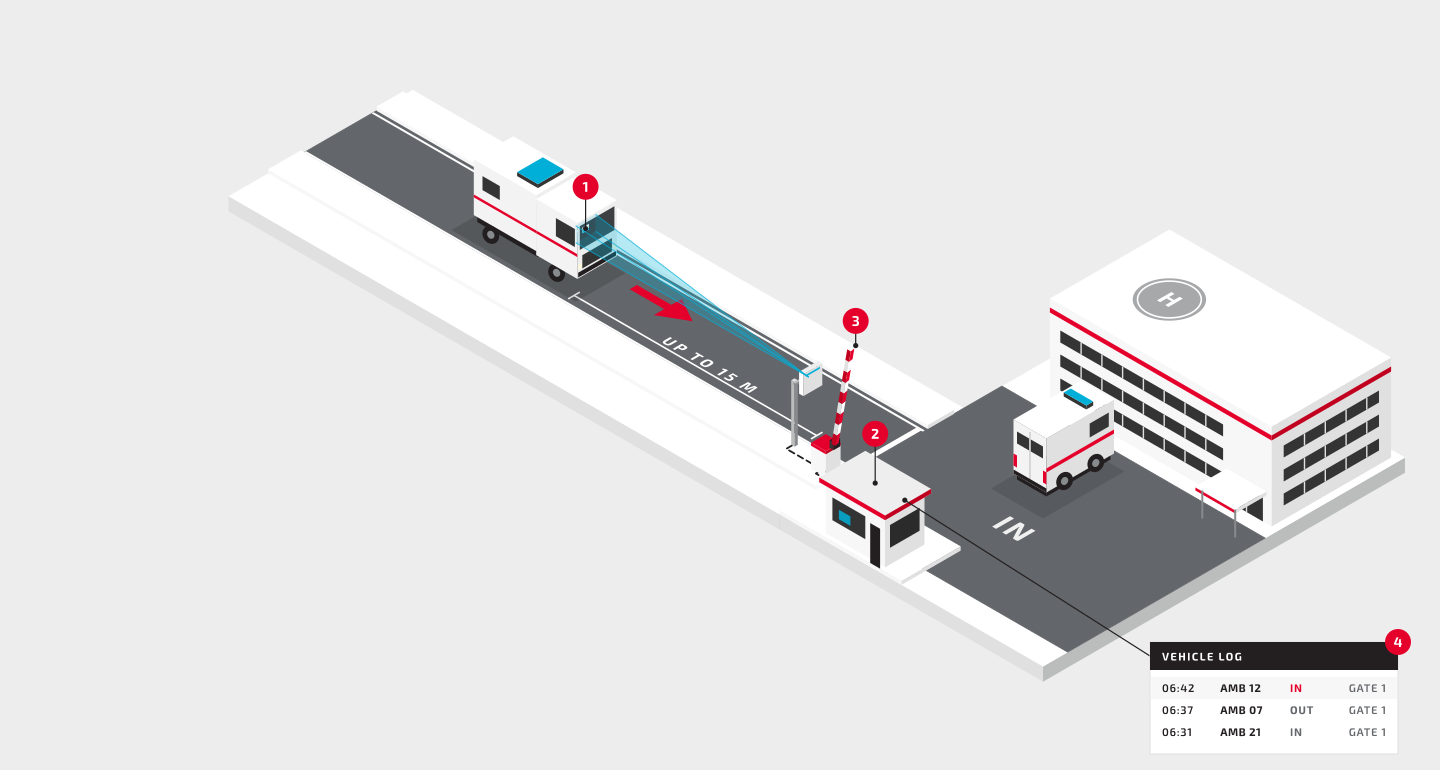
How Transit Ultimate works at the hospital gate

Isometric view of a hospital perimeter gate: a Transit Ultimate reader on a pole reads the tag in an approaching ambulance's windscreen from up to 15 metres, the hospital's access control system checks it, the barrier is already rising and the movement is logged, with the hospital block, its helipad and the emergency entrance canopy beyond
  1. Ambulance approaches

    Transit Ultimate reads the windscreen tag from up to 15 metres as the ambulance approaches.

  2. Vehicle identified

    The hospital's access control system checks it against the authorised emergency vehicles.

  3. Barrier already rising

    The driver never slows, with a patient on board.

  4. Movement logged

    Vehicle and time, for incident review and security compliance.

Beyond the ambulance gate

The emergency entrance is usually where a project starts. The same readers identify vehicles at the other gates a hospital estate controls.

  • Staff car parks

    uPASS Go and a windscreen tag let staff in and out at shift change without a card.

  • Service yards and deliveries

    Deliveries and contractors are identified by number plate with ANPR Lumo, and visitor management platforms integrate directly for contractor and visitor flow.

  • Ambulance stations and HQs

    The fleet is identified at its own base the same way, as at North West Ambulance Service, where ANPR Lumo cameras in stainless steel bollards secure the HQ perimeter.

  • Restricted areas

    A reader at an inner gate limits pharmacy, plant and other restricted areas to the vehicles that belong there.

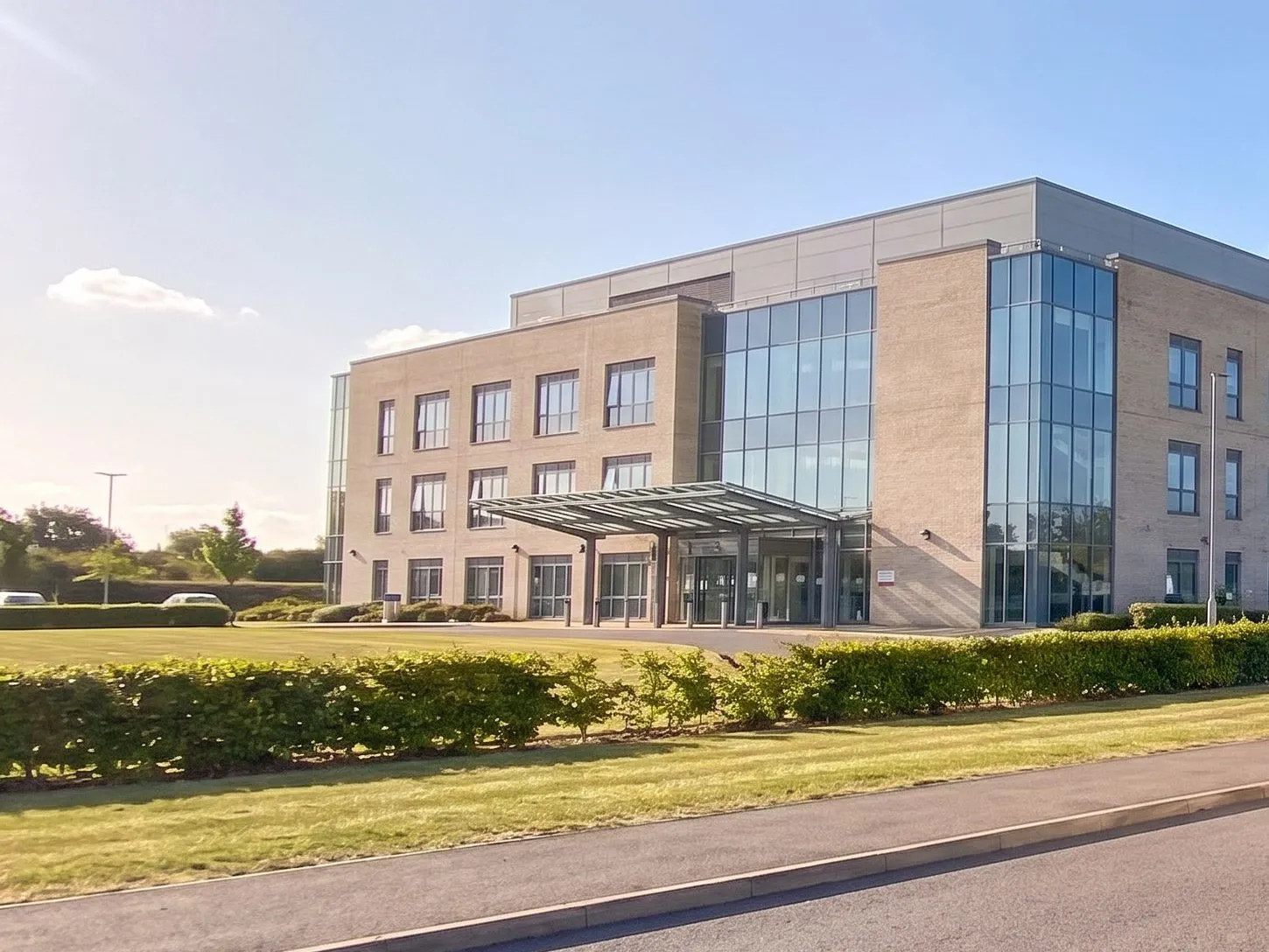
Hospital building with a glazed entrance canopy, seen across the lawn and hedges from the approach road

The Nedap applications catalogue

Healthcare & Emergency Vehicle Access is one of 11 applications in Vehicle Access, Solved, the Nedap vehicle identification catalogue we publish for the UK and Ireland. Each page shows which reader does the main job, where a second reader picks up untagged or visitor vehicles, and a site where it is in use.

15 pages, PDF. Healthcare & Emergency Vehicle Access is on page 13.

Open the applications catalogue

Case study

North West Ambulance Service NHS Trust

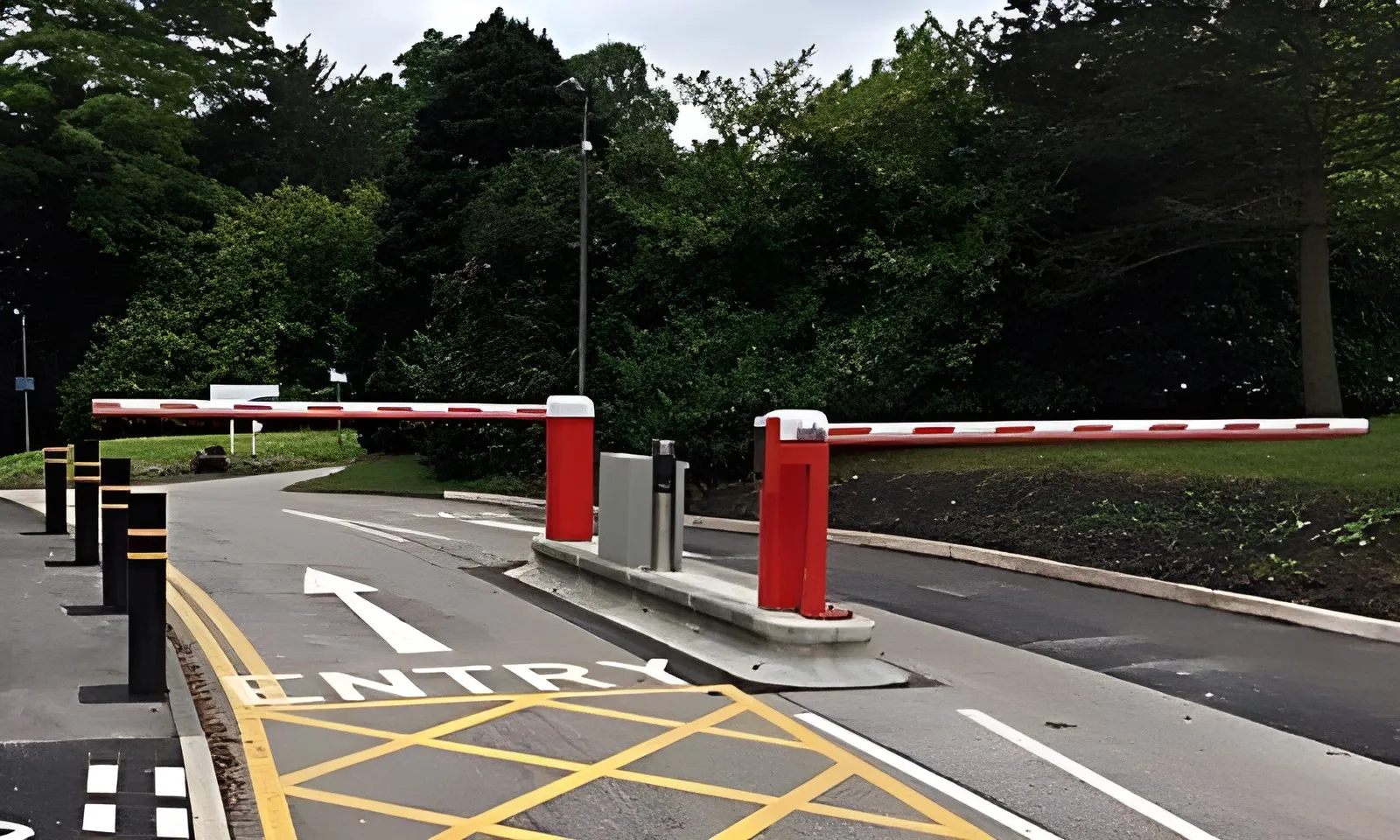
NWAS operates around 1,000 vehicles. At its Lancashire regional HQ, Expert Security UK installed Nedap ANPR Lumo cameras housed in SSP-ANPR stainless steel bollards, which protect the cameras from vehicle impact, to secure the HQ perimeter.

The cameras integrate with the Net2 access control system already in use at the HQ, so a recognised plate opens the barrier like a card presented at a reader, and unauthorised parking has stopped.

  • Around 1,000 vehicles in the fleet
  • ANPR Lumo cameras in impact-protected stainless steel bollards
  • Integrated with the Net2 system already at the HQ

Installed by Expert Security UK.

Read the full case study ›

‘The system is very fast and ticks all the boxes for us.’

Dan Schofield, Sales Director, Expert Security UK

Works with the hospital's access control system

None of the readers needs its own software. Each one hands the tag or plate number to the hospital's access control system as a standard reader, so it can be added to the system already on site or to Norpass3, our licence-free access control software. ANPR Lumo converts a valid plate into the same authentication signal as a standard card reader over Wiegand, and also has an Ethernet connection with a REST interface for other software.

Visitor management platforms integrate directly for contractor and visitor flow, and every read is logged with the vehicle and time for incident review and security compliance. The result is less friction at every point of the access flow, and a system that doesn't add to the cognitive load of staff focused on patient care.

Our engineers work through the integration with you or your installer before the hardware is specified, and stay involved through commissioning.

ReaderOutputs and interfacesProtectionDatasheet
Transit Ultimate Outputs and interfaces Wiegand, magstripe and barcode outputs. RS232 as standard, with RS422, RS485, TCP/IP and Profibus DP interface boards Protection IP66 Transit Ultimate datasheet
ANPR Lumo Outputs and interfaces Wiegand, RS485 and Ethernet, with a REST interface for other software Protection IP65 ANPR Lumo datasheet
uPASS Go Outputs and interfaces Wiegand and magstripe (clock and data) outputs Protection IP66 uPASS Go datasheet

Hospital vehicle access control FAQs

What is vehicle access control for a hospital?

Vehicle access control for a hospital identifies each vehicle arriving at a perimeter gate or car park and decides whether the barrier should open. Emergency vehicles and staff cars are usually identified by a long-range RFID tag in the windscreen, visitors and contractors by number plate, and every movement is logged for incident review.

Does an ambulance have to stop at the gate?

No. Transit Ultimate reads the windscreen tag from up to 15 metres, so the barrier is already rising as the ambulance approaches and the driver never slows. Manual gate operations, swipe cards and short-range readers all add delay exactly where it is most costly.

What about ambulances from another trust, or vehicles without a tag?

ANPR Lumo gives a tag-free route. It reads the number plate from 2 to 10 metres and, through its Wiegand output, hands the hospital's access control system the same authentication signal as a standard card reader, so a plate on the list opens the barrier like a card.

How does it handle staff parking at shift change?

With a windscreen tag. uPASS Go reads a battery-free UHF tag at up to 10 metres, so staff drive into the car park without stopping at a reader, with far less friction than a card-based system.

Will it work with the access control system already on site?

In most cases, yes. Transit Ultimate, ANPR Lumo and uPASS Go all have a Wiegand output, so the hospital's system sees each one as a card reader, and visitor management platforms integrate directly for contractor and visitor flow. At North West Ambulance Service's regional HQ, ANPR Lumo works with the Net2 system that was already in use.

Can the cameras be protected from vehicle impact?

Yes. At North West Ambulance Service's HQ the ANPR Lumo cameras are housed in SSP-ANPR stainless steel bollards, which protect them from vehicle impact at the perimeter.

How much does vehicle access control for a hospital cost?

It depends on the number of gates and lanes, how many vehicles need tags, whether visitors are read by ANPR, and the barrier work your installer carries out. Our ANPR system cost guide covers typical camera and installation costs, or ask us for a quote for your site.

Related products

New

Nedap uPASS Go

Based on battery-free passive UHF technology, the uPASS Go reader provides a cost-effective solution for convenient vehi…

› View Details

Talk it through with an engineer

Every hospital estate is different, and every access control system has its quirks. Before the hardware is specified, talk to someone who has done it before.

Our engineers in Cwmbran will help you scope the application, recommend the reader mix, work through the integration with the systems already on site, and stay with you through commissioning. When you call, it's an engineer who answers.
Call +44 (0)1633 485 533

It helps to know

  • How many gates and car parks there are, and which of them carry emergency vehicles
  • Who arrives: ambulances, staff, contractors, deliveries, visitors
  • The access control system, the visitor management platform and the barriers already on site

Loading the form…

We're here to help

Call +44 (0)1633 485 533 or Email Us